Industrial Air Filtration vs Indoor Air Quality (IAQ): Best HVAC Filters for 2026
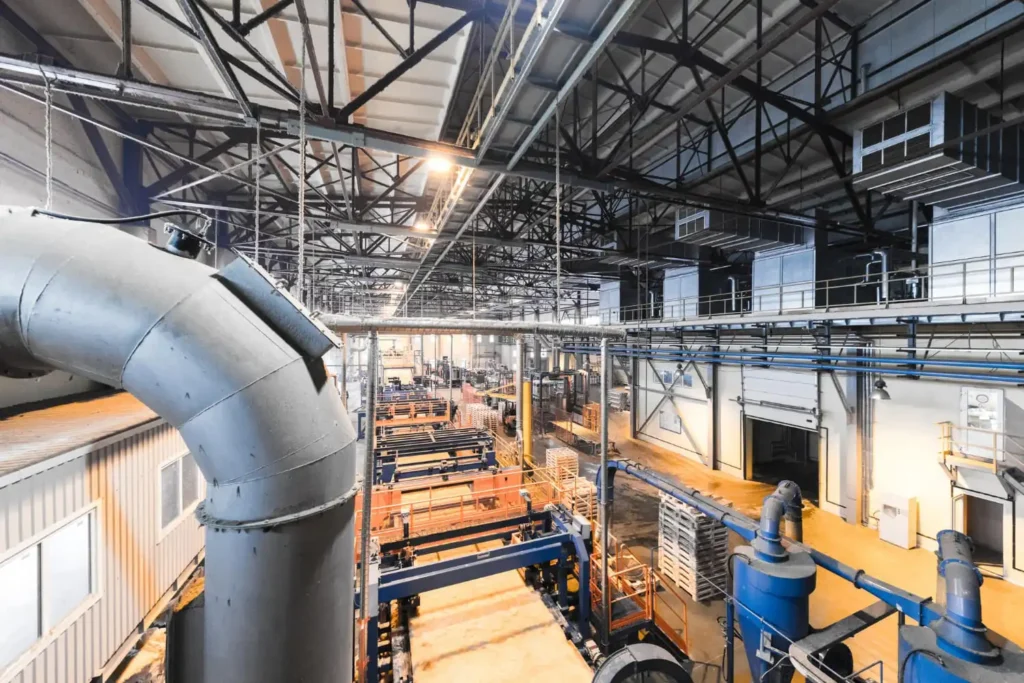
In commercial and public settings, as well as in manufacturing and industrial settings where employees are frequently exposed to a variety of air pollutants, indoor air quality (IAQ) is a crucial component of workplace safety. Monitoring and safeguarding the health and the welfare of the workers, also assisting in ensuring the regulatory compliance, and preserving ideal production conditions all depend on an efficient industrial air filtration solutions.
Poor indoor air quality (IAQ) in manufacturing and industrial settings can sometimes pose serious health risks to employees, including headaches, eye irritation, fatigue, and respiratory disorders.
In 2026, companies’ approaches to air management are changing due to the sophisticated HVAC technologies and more intelligent monitoring systems. Businesses can choose the best HVAC filters and techniques to create safer, cleaner, and more productive work environments by understanding how industrial air filtration solutions and indoor air quality (IAQ) are related.
What Is Industrial Air Filtration and Why It Matters in 2026
In many industrial applications, air quality is an important consideration. High air quality is essential for these applications to ensure product integrity, reduce pollution, and ultimately enhance product safety.
Manufacturers use air filtering devices in their industrial processes to obtain this high air quality. Industrial air cleaning improves air quality in a system or environment by removing solid particles and molecular pollutants generated by industrial processes.
By 2026, tighter environmental laws and worker-safety requirements will require efficient filtration rather than make it optional.
Reliable industrial air filtration solutions are essential for many companies to continue operating and comply with safety and health regulations. Important industries include:
- Medical facilities
- Manufacturing facilities
- Food preparation
- Pharmaceuticals
- Manufacturing of electronics
- Commercial structures
To avoid contamination, safeguard employees, and ensure product quality in these settings, it is crucial to maintain ideal indoor air quality (IAQ). Sophisticated HEPA filter industrial systems and other filtration technologies often meet strict requirements.
Understanding Indoor Air Quality (IAQ) in Industrial HVAC Systems
To comprehend indoor air quality (IAQ), you must become familiar with the essential terminology used to characterize the different elements, contaminants, and variables that affect how clean the air we breathe is.
What Affects Indoor Air Quality (IAQ)?
Several factors, such as ventilation, equipment emissions, and dust levels, influence indoor air quality (IAQ) in industrial buildings:
- Particulate matter and dust from production operations
- Volatile organic compounds (VOCs)
- Emissions from combustion, like carbon monoxide and diesel
- Fungi, or any mold
- Moisture
- Old HVAC systems or inadequate ventilation
- Insufficient industrial air filtering systems
Ineffective filtering allows airborne pollutants to accumulate, posing health risks and reducing productivity. To maintain safe indoor air conditions, modern HVAC systems with HEPA filter industrial units and advanced filtering technologies are essential.
Poor IAQ Risks in Industrial Facilities
A low IAQ indicates that there are a lot of dust particles in the air, which workers may come into contact with or breathe in. These particles may cause a range of health problems, including dermatitis, eye irritation, and allergic reactions such as rashes and asthma, depending on their chemical composition. The length of exposure correlates with the severity of the problems.
Inhaling dust can cause lung cancer and respiratory issues such as coughing, wheezing, and bronchitis. The type of dust particles strongly influences the severity of pulmonary damage. For instance, crystalline silica and metals are highly poisonous. If someone swallows silica particles, they can release harmful chemicals.
Over time, acute health issues caused by poisonous dust might develop into chronic illnesses. For example, gastroesophageal reflux disease (GERD) or chronic obstructive pulmonary disease (COPD) could grow from a persistent cough.
Industrial Air Filtration vs Indoor Air Quality (IAQ): Key Differences
Indoor air quality and industrial air filtration systems aren’t the same, even though people sometimes mix them up.
Industrial air filters work very hard in places like factories, food plants, oil refineries, and pharmaceutical labs. They pull dust, chemicals, allergens, and other kinds of contaminants out of the air. It’s not just about cleaner air; these filters protect machines, keep the workers healthier, and also help companies follow environmental rules.
Now, when people talk about the indoor air quality, they usually consider factors like temperature, humidity, air cleanliness, and ventilation. Most of us spend hours inside, especially in busy offices or big industrial buildings packed with people. That’s why paying attention to indoor air quality IAQ matters.
Efficient industrial air filtration systems directly impact indoor air quality (IAQ) and HVAC air quality improvement.
Best HVAC Filters for Industrial Air Filtration in 2026
HEPA Filters for Industrial Applications
An HEPA filter industrial system is among the best choices for eliminating airborne pollutants. According to the official definition provided by the U.S. Department of Energy, it refers to a “high efficiency particulate air” filter. Theoretically, this kind of air filter may eliminate around 99.97% of dust, pollen, mold, germs, and other kinds of airborne particles that are 0.3 microns (µm) in size. Usually made of fiberglass, these filters consist of a dense mat of randomly arranged fibers.
MERV-Rated HVAC Filters for IAQ Improvement
MERV ratings indicate how well an air filter captures particles of different sizes. The American Society of Heating, Refrigerating, and Air-Conditioning Engineers (ASHRAE) developed this rating system. The highest number means that the filter does a good job of grabbing the tiny particles.
With these ratings, it’s way easier to compare filters and see how each one changes the air you’re breathing at home. When air moves through a MERV filter, it captures airborne particles and keeps them out of the air you breathe in. Testing evaluates their ability to capture particles in three different size ranges:
Here’s a quick breakdown:
- E1 (0.3 to 1 micron): Which includes tiny particles here—things like viruses or smoke.
- E2 (1 to 3 microns): Slightly bigger, such as bacteria and mold spores.
- E3 (3 to 10 microns): These are the big particles, such as dust, pollen, pet dander, that sort of thing.
Activated Carbon & Specialized Filters
The purpose of the activated carbon filters is to remove gases, odors, and chemical vapors. Common applications for these filters include:
- Chemical production facilities
- Laboratories
- Facilities for processing food
- Coating and painting activities
Other examples of specialized industrial air filtration solutions are:
- Systems for UV air purification.
- Devices with multiple stages of filtration.
These technologies facilitate long-term HVAC air quality improvement and also improve indoor air quality (IAQ).
How HVAC Filters Improve Indoor Air Quality (IAQ)
Role of HVAC Systems in Air Circulation
Through several methods, HVAC (heating, ventilation, and air conditioning) systems are essential to preserving a good indoor air quality (IAQ):
Among the main advantages are:
- Constant Air Movement.
- Consistency in temperature.
- Air quality and filtration.
- Air exchange and ventilation.
Smart HVAC Filters & Monitoring in 2026
Industrial air filtration solutions are being revolutionized in 2026 by smart filtration technology. These days, modern systems include:
- Real-time monitoring of air quality.
- Automated notifications for filter replacement.
- IoT-powered HVAC units.
Choosing the Right Industrial Air Filtration Solution
Choosing an industrial air filtration system isn’t just about ticking the boxes. You also need to zero in on what your facility actually faces every day, and kind of regulations demand, and what you’re actually hoping to get done.
Start by figuring out your Specific Filtration Needs: Different types of industries have their own contaminants, sometimes it’s chemicals, other times it’s dust, tiny particles, or gas. Pin down which type of contaminants are your biggest headache. Don’t forget to consider whether you’re dealing with air, liquid, or gas, and get clear on the size, type, and type of particles you want to filter out.
Examine Filtration Efficiency and Performance: Focus on how well filters perform their job. It’s not just about having a filter; it’s about having one that actually works for what you need. Also, look at how long they last, and how much air (or liquid) they can handle, their flow rate, and also their micron rating. All that tells you is how effective your system will be. Nobody wants to swap out filters every week or deal with something that barely works.
Make the Correct Filtration Technology Choice: Filtration technology varies by industry. The contaminants and the operating conditions also determine which filtering method is best.
Evaluate Operational and Maintenance Costs: Consider both the upfront price and ongoing costs when evaluating a filtration system. Filters that last longer actually save you money in the long run. Check if the company offers good technical support, and if the system’s easy to maintain, that stuff matters more than you’d think.
Conclusion
As enterprises place greater priority on efficiency, safety, and regulatory compliance in 2026, the significance of efficient industrial air filtration technologies continues to grow. The ultimate objective is to enhance indoor air quality (IAQ) throughout the entire facility, even though industrial air filtration solutions concentrate on the technologies and systems that eliminate pollutants. Modern HVAC air quality improvement tactics mostly rely on advanced filters, such as high-MERV filters, industrial HEPA units, and activated carbon systems.
FAQs
What is the difference between industrial air filtration and indoor air quality (IAQ)?
Industrial air filtration removes heavy dust, fumes, and contaminants from factories and production units. Indoor Air Quality (IAQ) focuses on improving air cleanliness in offices, homes, and commercial buildings using HVAC filters and ventilation systems.
Which HVAC filter is best for industrial use in 2026?
For industrial environments, high-efficiency filters like HEPA, bag filters, and cartridge filters are recommended in 2026. The best choice depends on dust load, airflow requirements, and industry type.
What type of HVAC filter improves indoor air quality the most?
HEPA filters and high MERV-rated HVAC filters (MERV 13–16) are most effective for improving indoor air quality by removing fine dust, allergens, bacteria, and airborne particles.
Can industrial filters be used for office or commercial buildings?
Industrial filters are designed for heavy-duty applications and may not be suitable for standard office HVAC systems. IAQ-specific HVAC filters are more efficient and cost-effective for commercial indoor spaces.
What is the ideal MERV rating for IAQ in 2026?
For better indoor air quality in 2026, experts recommend MERV 13 or higher filters for offices, hospitals, and commercial buildings to capture fine particles and improve air safety.
How often should HVAC filters be replaced?
HVAC filters should typically be replaced every 2–3 months, but industrial environments may require more frequent replacement depending on dust levels and operating conditions.
Why is air filtration important for industrial facilities?
Proper industrial air filtration protects machinery, improves worker health, reduces maintenance costs, and ensures compliance with environmental and safety regulations.