

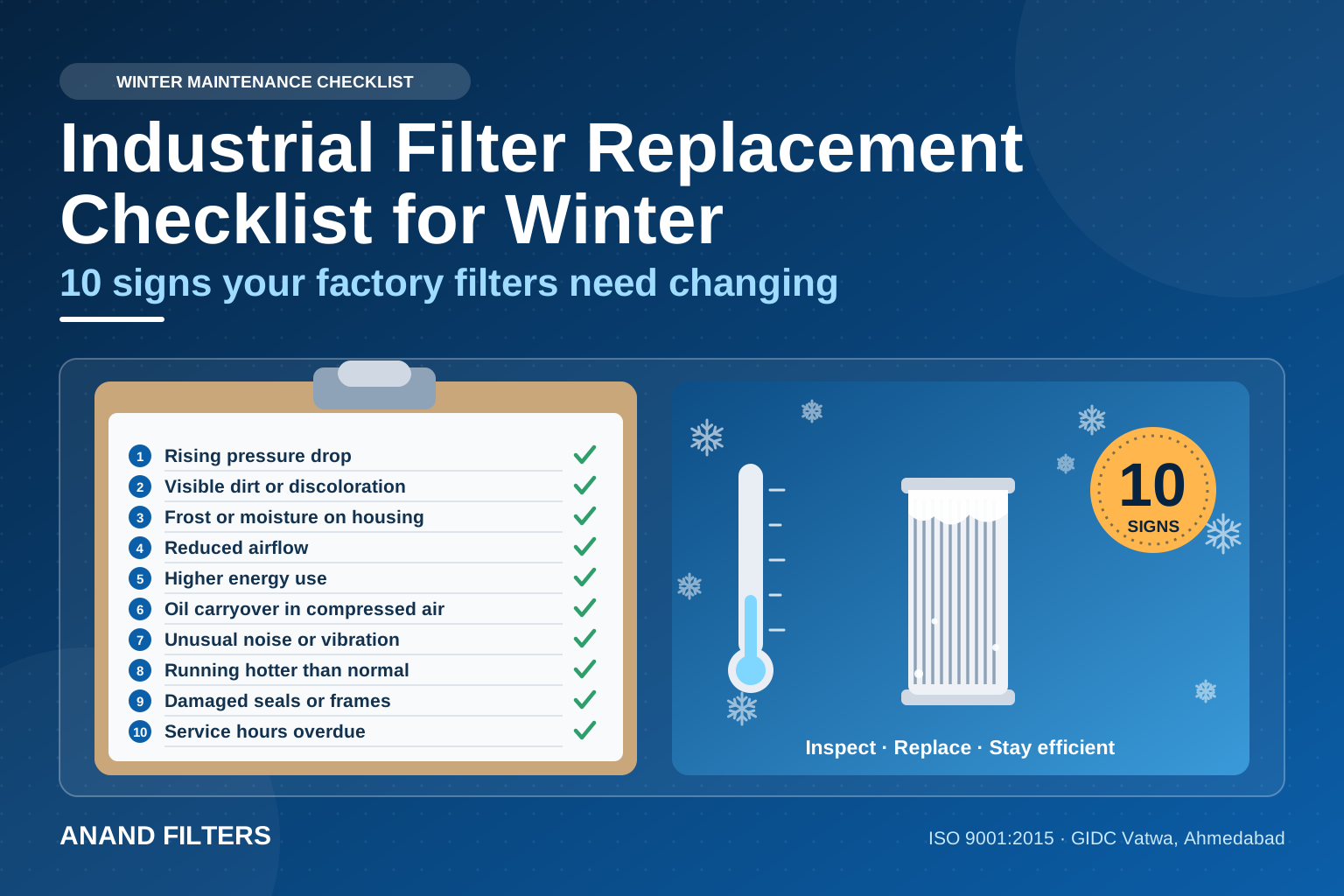
Industrial Filter Replacement Checklist for Winter: 10 Signs Your Factory Filters Need Changing
Industrial filter replacement is easy to postpone in winter, when plants are busy and the weather seems harmless. In most of India, though, winter means fog, damp nights, closed doors, smog and cold starts, and these conditions load and damage filters faster than many teams expect. This checklist covers ten signs that your factory filters need changing, across dust collectors, compressors, hydraulics and HVAC, so you can act before a breakdown.
Quick answer: replace a filter when its pressure difference stays high after warm-up, when the media is damp, caked or torn, when dust appears on the clean side, or when it is near its service hours. In winter, do not wait for a failure.
Table of Contents
Why Winter Changes How Filters Perform
Winter is not as harsh as the monsoon, but it still changes how filters behave:
- Closed doors and smog: less ventilation and higher outdoor dust mean filters load faster.
- Fog and cold nights: condensation makes dust damp, so it cakes on the media and blinds it.
- Cold oil: thicker oil raises pressure drop across oil and hydraulic filters until the system warms up.
- Brittle seals: cold hardens gaskets, hoses and seals, which then crack or leak.
- Moisture in compressed air: condensate reaches filters and pulse valves.
Real freezing is limited to hill regions such as parts of Himachal Pradesh, Uttarakhand and Jammu and Kashmir, but damp, cold nights affect most plants. The best time to act is before December and January, when cold nights and smog are at their worst in many regions. For the wet-season equivalent, read industrial filter maintenance during the monsoon and our overview of the seasonal impact on industrial filtration needs.
10 Signs Your Factory Filters Need Changing
Use this table during your rounds. Each sign points to a cause and a clear action, so you can plan filter element replacement before performance drops.
| Sign | What it means | Action |
|---|---|---|
| 1. Pressure difference stays high after warm-up | Cold oil can raise readings at start-up. If it stays high at working temperature, the element is loaded. | Replace the element |
| 2. Pressure rises faster than usual | Media is loading or caking, and pulse cleaning runs more often. | Inspect and replace loaded elements |
| 3. Dust on the clean side, pinholes or tears | The media has failed and dust is passing through. | Replace, and check seals and cages |
| 4. Damp, caked dust or hopper bridging | Condensation is blinding the media. | Fix leaks, dry the system, replace blinded elements |
| 5. Weak suction or fan motors drawing more current | Loaded filters are restricting airflow. See how to maximise dust collector efficiency. | Check pressure difference and replace |
| 6. Compressor intake indicator on, or the machine running hotter | A restricted intake raises power use and temperature. See how a dirty compressor filter raises energy cost. | Replace the intake element |
| 7. Oil in the air line or high separator pressure difference | The separator element is saturated or damaged. See oil separator failure symptoms. | Replace the separator element |
| 8. Hydraulic bypass indicator stays on after warm-up | The filter is loaded and oil is bypassing it. See when to change a hydraulic filter. | Replace the element |
| 9. Cracked gaskets, brittle hoses or leaks around the element | Cold has damaged seals, so air or oil can bypass the element. | Replace seals and check seating |
| 10. Element past its service hours, or rusted, swollen or discoloured | Media and frames weaken with age and damp. | Replace before peak winter |
Take readings at working temperature and compare them with your baseline. A slow, steady rise is normal wear, but a sudden jump over a few days points to condensation, a damaged seal or a blocked pulse system. Compressor users can also read our guide to air compressor air filter replacement signs.
Winter Industrial Filter Maintenance Checklist
Good industrial filter maintenance in winter starts before the cold arrives. Work through this list:
- Record the baseline pressure difference for every filter, and compare readings at working temperature.
- Inspect door seals, gaskets, expansion joints and ducts for leaks that let in cold, damp air.
- Drain compressed-air condensate and check dryers and drain valves.
- Check pulse valves, solenoids and hoses for cracks and correct pressure.
- Empty hoppers and check airlocks, so dust does not sit and absorb moisture.
- Calibrate or replace pressure gauges and indicators.
- Check your stock of spare elements, and log every change.
Safety: isolate and depressurise equipment before changing any element, and wear suitable dust protection. Used filters can hold harmful dust, so bag and dispose of them carefully.
Where collectors handle warm process gas, keep the gas temperature comfortably above its dew point and insulate hoppers and ducts to limit condensation. In hill regions, also protect compressed-air lines from ice. For compressor timing, read how to know when your industrial air compressor needs servicing.
Filter Cleaning in Winter: Clean or Replace?
Filter cleaning only helps when the element is designed for it. Follow these rules:
- Clean only reusable elements, and follow the maker’s instructions.
- Never wet-clean, or blow compressed air through, disposable pleated or paper media. It tears the media.
- Dry the element fully before refitting. Damp elements cake, and in cold regions can freeze.
- If cleaning does not bring the pressure difference back close to a new element’s reading, replace it.
- Log how many times each reusable element has been cleaned, because repeated cleaning gradually wears the media.
For more on this decision, see should you clean or replace your dust collector filter.
Filter Element Replacement in Winter
Plan your industrial filter replacement before the winter rush, because lead times lengthen, especially for custom sizes. Our guide to custom filters vs standard filters explains when each makes sense. For damp or humid sites, choose media suited to moisture, and match the size, rating and airflow to the duty. Before you order, note:
- The airflow and housing size of each unit.
- Operating temperature and moisture at that point.
- The efficiency or micron rating you need.
- Frame, seal and end-cap quality, since poor sealing lets air bypass the media.
- How many spares to hold for the season.
Anand Filters: Industrial Filter Manufacturers supplies elements for the main winter trouble spots:
- Dust collector cartridges and non-woven filter bags for dust control.
- Panel filters for ventilation and HVAC.
- Compressor air filters for intake protection.
- Hydraulic filters for oil cleanliness.
For budgeting, see industrial filter price in India.
Frequently Asked Questions
How often should industrial filters be replaced in winter?
Follow the manufacturer’s hours and replace when pressure difference stays high after warm-up. Inspect before winter and monthly during it, and replace sooner in dusty or damp conditions.
Does cold weather affect industrial filters?
Yes. Cold, damp air causes condensation that cakes the media, cold oil raises pressure drop at start-up, and cold hardens seals, so filters load or leak sooner.
Why does filter pressure drop rise in winter?
Condensation and caked dust block the media, closed doors raise dust levels, and thick cold oil adds resistance until the system warms up.
Can I clean a filter instead of replacing it in winter?
Only if it is designed to be cleaned, and dry it fully before refitting. Replace disposable or torn elements, and any element whose pressure difference stays high after cleaning.
What are the signs a dust collector filter needs changing?
High pressure difference after warm-up, dust on the clean side, pinholes or tears, caked media, weak suction and more frequent pulse cleaning.
Winter industrial filter replacement works best when it is planned. Log baseline readings, watch for the ten signs and change elements before they fail. Anand Filters: Industrial Filter Manufacturers helps Indian plants choose and supply filters for dust, compressed air, hydraulics and ventilation, so your winter changeovers are quick and planned.
Need filters before winter peaks? Share your filter type, size and application, and our team will help you choose the right elements. Contact Anand Filters for a quotation.