

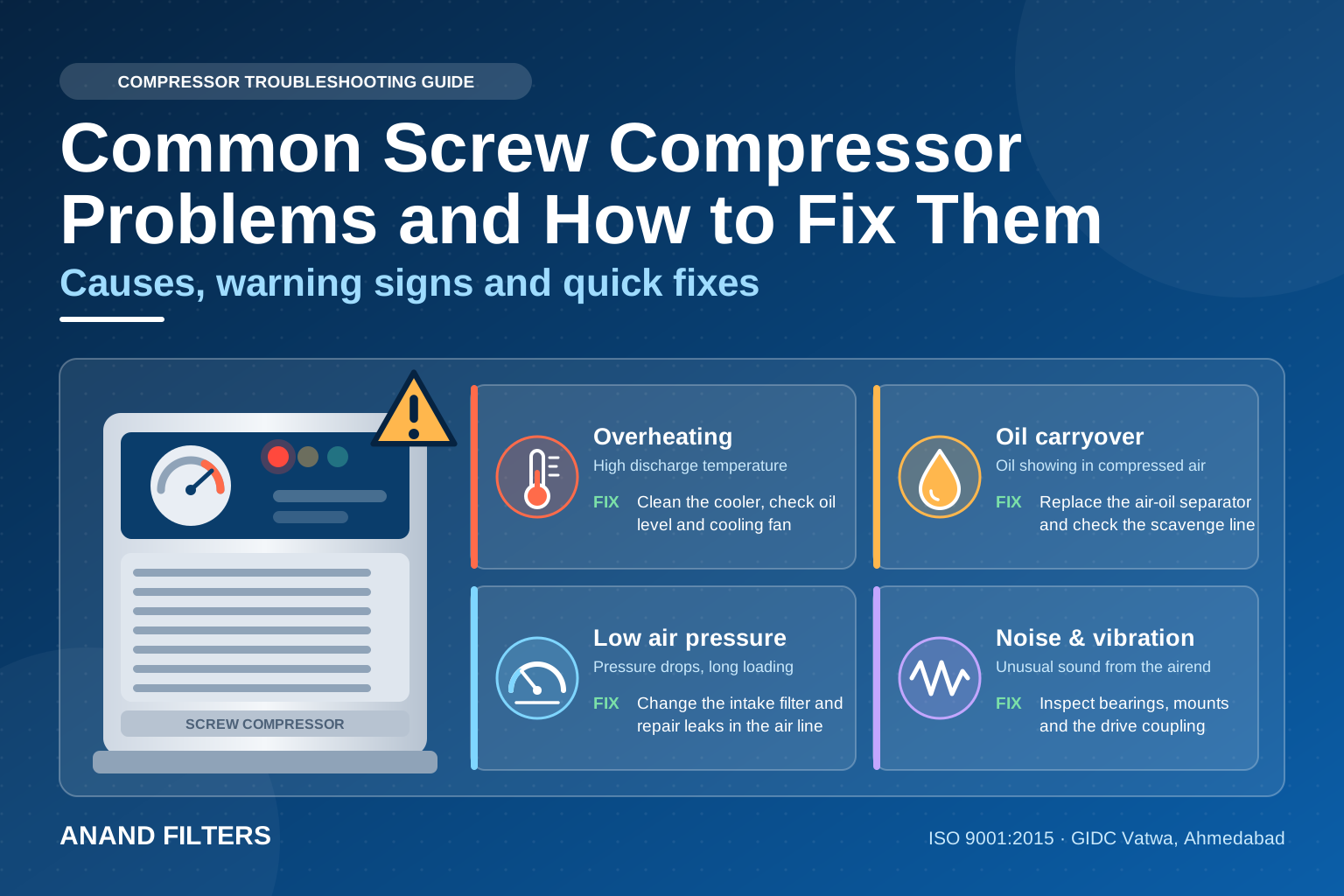
Common Screw Compressor Problems and How to Fix Them
Screw compressor problems rarely appear without warning. A rising temperature, a trace of oil in the air line or a slow drop in pressure is usually the first sign, and fixing the cause early costs far less than an unplanned stop. If your plant depends on a screw compressor, knowing what to check first can save hours of downtime. This guide covers the most common faults, with a clear order to follow for overheating, high oil carryover and low air pressure.
Quick answer: most screw compressor problems come from four things: restricted airflow, poor oil condition or level, weak cooling, and faulty valves or controls. For overheating, check the oil level and coolers first. For oil carryover, check the separator element and scavenge line. For low air pressure, check the air filter and look for leaks.
Table of Contents
Before You Troubleshoot
Safety first: stop the compressor, isolate and lock out the power, and let the system depressurise fully, including the separator tank. Oil and metal parts can stay very hot. Take alarm and trip settings from your service manual.
Note your normal readings for discharge temperature, pressure, separator pressure difference and oil level, and read the controller’s fault history before touching anything. A baseline makes every later check faster.
Screw Compressor Problems at a Glance
| Symptom | Likely causes | First check |
|---|---|---|
| Overheating | Low or old oil, dirty cooler, failed fan, stuck thermostatic valve | Oil level, cooler fins, fan |
| High oil carryover | Aged separator element, blocked scavenge line, overfilled sump | Separator pressure difference, oil level |
| Low air pressure | Choked air filter, inlet valve fault, leaks, loaded separator | Restriction indicator, leaks |
| High oil consumption | Damaged separator element, oil leaks, foaming oil | Separator, joints, oil condition |
| Frequent load/unload cycling | Air leaks, narrow pressure band, weak minimum pressure valve | Leaks, pressure settings |
| Noise or vibration | Worn bearings, loose coupling, air end wear | Stop and call an engineer |
Screw Compressor Overheating
Overheating is the most common alarm, and it often builds slowly as a cooler clogs or the oil degrades. A high discharge temperature alarm or trip is your signal to stop and investigate rather than reset and carry on.
Common causes
- Low, degraded or wrong-grade oil, which carries away less heat.
- A dirty oil cooler or aftercooler, with fins clogged by dust or oil film.
- A failed or slow cooling fan.
- A stuck thermostatic valve that keeps oil away from the cooler.
- A clogged oil filter or air filter.
- Hot, poorly ventilated plant-room air, including recirculated exhaust air.
How to fix it
- Let the machine cool, then check the oil level and condition.
- Clean the cooler fins and confirm the fan turns the right way.
- Check the oil filter and replace it if it is overdue.
- Test the thermostatic valve and the temperature sensor.
- Improve ventilation and keep hot air from returning to the intake.
In India’s summer heat and dusty plants, clean coolers more often. Using the right lubricant also matters, so read which oil is used in screw compressors, and see our tips on industrial filter maintenance during the monsoon.
High Oil Carryover
High oil carryover means oil is leaving with the compressed air. You may see oil in drains, filters, pipework or tools, along with a falling oil level.
Common causes
- An aged, loaded or damaged separator element.
- A blocked scavenge line, so oil collects in the separator and is carried out.
- An overfilled sump.
- Degraded, wrong or foaming oil.
- A minimum pressure valve that does not hold, which lets tank pressure fall and air speed rise.
How to fix it
- Check the oil level and make sure it is not above the mark.
- Inspect the scavenge line and its orifice for blockage.
- Read the pressure difference across the separator and replace the element if it is high or damaged.
- Change the oil if it is dark, foamy or overdue.
The separator is the part most often behind this fault. See oil separator failure symptoms and the air-oil separator filter replacement guide, or browse our air-oil separators. Oil in the air is a serious problem for food, pharma and paint processes, so act quickly.
Low Air Pressure and Low Air Output
Start by splitting the problem. Is the compressor failing to deliver its rated air, or is the plant using more than expected? A leak test or a quick look at the pressure gauges usually tells you which.
Supply-side causes
- A choked air filter, shown by the restriction indicator.
- An inlet valve that does not open fully.
- A loaded separator element adding resistance.
- A sticking minimum pressure valve or a faulty control solenoid.
- Air end wear, as a last resort after everything else is ruled out.
Demand-side causes
- Air leaks in pipes, hoses and fittings.
- New equipment added to the line.
- Undersized pipework or a clogged dryer or line filter.
Check the air filter first, because it is the cheapest fix. Our guides on air compressor air filter replacement signs and the types of compressor filters help, and you can browse our compressor air filters. If the supply side is clear, find leaks with a soap solution or an overnight pressure-drop test.
A Simple Diagnostic Order
When in doubt, work through the checks in this order, from the cheapest to the most expensive:
When to Call a Service Engineer
Trained maintenance staff can usually handle filters, separator elements, oil changes, cooler cleaning and leak tests. Call an engineer for air end noise, bearing or rotor faults, repeated electrical trips and any fault that returns after the basic checks. Never override alarms to keep the machine running. Our services page explains how we can support you.
How to Prevent Most Problems
- Replace the air filter, oil filter and separator element on schedule, not after a failure.
- Keep coolers clean and the compressor room ventilated.
- Use the correct oil grade and watch its level and colour.
- Fix air leaks early and record your normal readings.
For timing guidance, read how to know when your industrial air compressor needs servicing. When you buy replacements, use our genuine screw compressor spares buyer’s checklist, because poor-quality elements cause many repeat faults.
Frequently Asked Questions
Why does my screw compressor keep overheating?
The usual causes are low or old oil, a dirty cooler, a failed fan, a stuck thermostatic valve or poor ventilation. Check the oil level and clean the cooler first.
What causes oil carryover in a screw compressor?
A worn or loaded separator element is the most common cause. A blocked scavenge line, an overfilled sump and foaming oil can also let oil leave with the air.
Why is my screw compressor not building pressure?
Common causes are a choked air filter, an inlet valve that does not open, a loaded separator, a sticking minimum pressure valve or large air leaks.
How do I know if the air-oil separator is bad?
Signs include oil in the air line, high pressure difference across the element, rising oil consumption and higher motor load. Replace it when these appear.
What temperature is too high for a screw compressor?
It depends on the model. Use the high-temperature alarm and trip settings in your service manual, and investigate as soon as the alarm sounds.
Can I keep running a compressor that is overheating?
No. Running hot degrades the oil and can damage the air end. Stop it safely, find the cause and fix it before restarting.
Most screw compressor problems have simple, checkable causes. Follow the diagnostic order, replace consumables on time and call an engineer when the fault goes beyond basic checks. Anand Filters: Industrial Filter Manufacturers supplies compressor air filters, air-oil separators and related elements for these duties.
Need the right filter or separator for your compressor? Share your model and running hours, and our team will help you choose. Browse our compressor filter range or contact us for a quotation.